The Festival de Málaga will screen 263 films from 6 to 15 March at its 29th edition, reaffirming its commitment to the diversity of Spanish-language cinema
The Malaga festival champions culture as a meeting place, finding in Malaga an unmissable annual event
The
Festival de Málaga will showcase the diversity of Spanish-language cinema at its 29th edition, from 6 to 15 March, with a programme featuring 263 films across all its sections (feature films, documentaries, short films, TV series, etc.) and a wide variety of parallel activities and events for all audiences. The Malaga festival will once again become a meeting point for Spanish-language audiovisual productions in its established MAFIZ Industry area. All of this under the motto "Culture is encounter, and Malaga, the best moment."
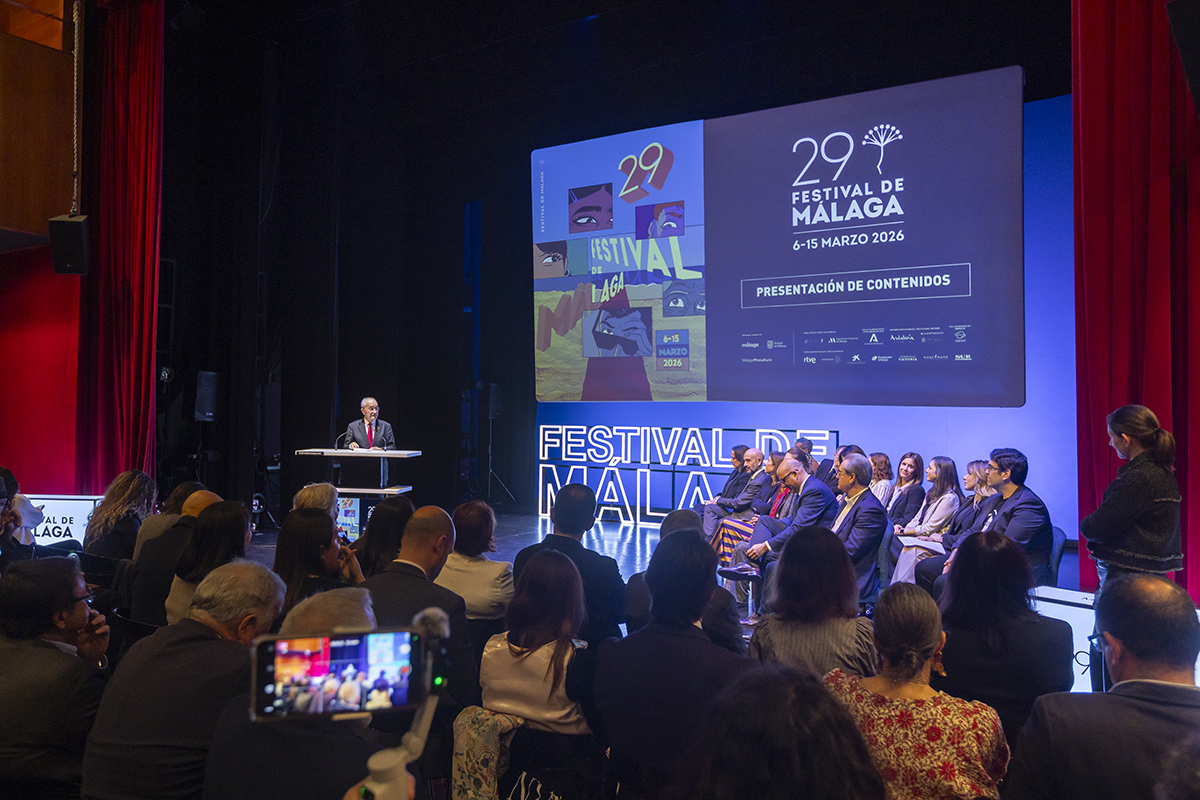
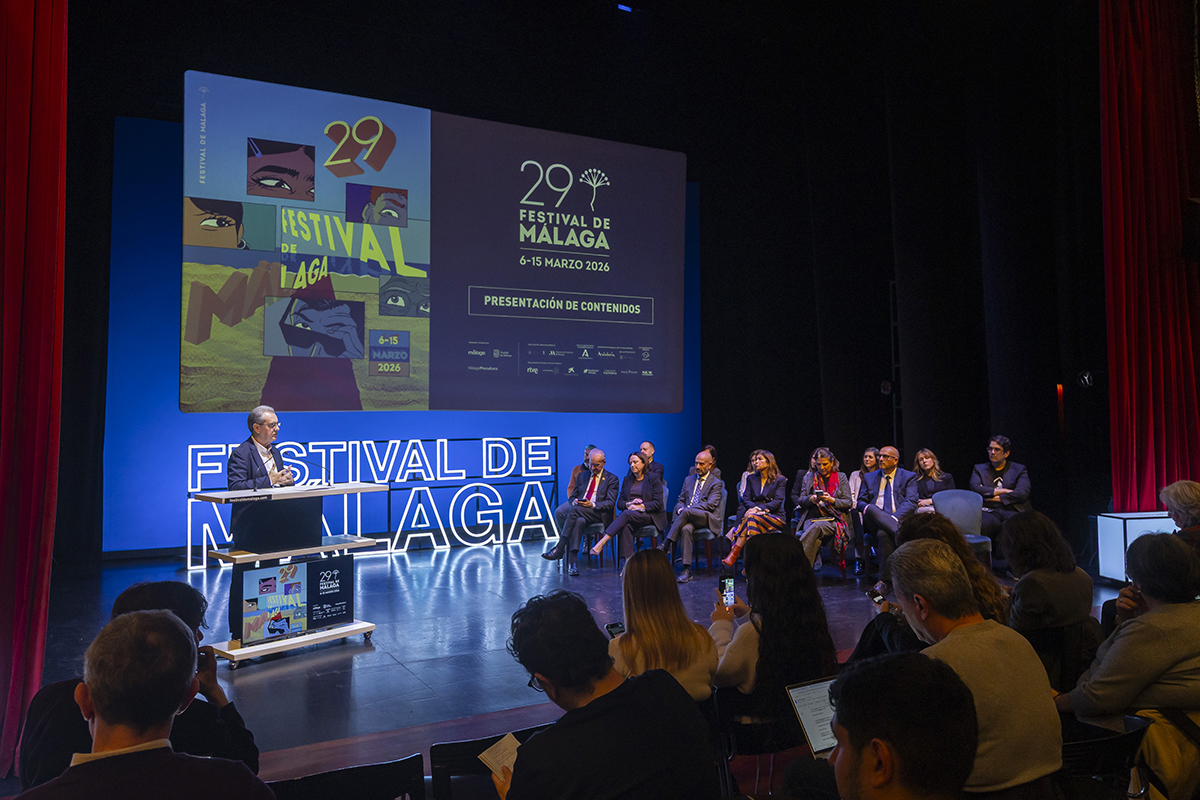
The presentation of this edition took place today at the Echegaray Theatre in Malaga. The event, presided over by the Mayor of Malaga,
Francisco de la Torre, was attended by representatives of the institutions and companies sponsoring the Festival: the Deputy Government Delegate in Malaga,
Francisco Javier Salas; the Director General of Promotion and Development of Tourism and Hospitality of the Regional Government of Andalusia,
Gemma del Corral; the Director General of Innovation and Cultural Promotion of the Ministry of Culture and Sport of the Regional Government of Andalusia,
Pía Halcón Bejarano; the Deputy for Culture of Malaga Provincial Council,
Manuel López Mestanza; the Councillor for Culture and Historical Heritage of Malaga City Council,
Mariana Pineda; the Deputy Director of Film of the RTVE Corporation,
Gervasio Iglesias; the producer of Atresmedia Cine,
Rosa Pérez; the regional head in Andalusia, Ceuta and Melilla of the "la Caixa" Foundation,
Juan Carlos Barroso; the Commercial Director of CaixaBank in Malaga, Cordoba, Almeria, Ceuta and Melilla,
Carmen González Novo;
Gema Domínguez, Head of Performing Arts at Fundación Unicaja;
Genoveva Ferragut, Head of Communication and External Relations at Cervezas Victoria;
Ana Bella García, Head of Sponsorship at Repsol;
Alexandra Petratota, Chief of Staff - Executive Office at Make & Mark;
Alberto Gómez Almendres, Editor-in-Chief of Diario Sur; and
Juan Antonio Vigar, Manager of Málaga Procultura and Director of the Festival de Málaga, as well as representatives from various collaborating entities of the Festival. The Mayor thanked all of them for their important commitment and support for culture, Malaga and the Festival.
Juan Antonio Vigar outlined the programme for this new edition of the Festival de Málaga. In terms of
participation, this year a total of 2,883 audiovisual works were submitted (compared to 2,745 in the previous edition, a 5% increase), resulting in a total of 263 selected works from 71 countries (compared to 54 in 2025). This demonstrates the festival's significant international standing, with a collection of titles that offer a snapshot of Spanish-language audiovisual productions in recent months.
The Festival Director highlighted
“some important figures that provide a clear picture of our festival: 66% of the submissions are Spanish, demonstrating that we are the leading festival for Spanish cinema. In addition, we received 864 Latin American audiovisual works, reflecting our considerable prestige and growing presence in our sister regions. And a statistic we are particularly pleased with: we continue to be a driving force behind emerging talent, with 31.5%, or 909, of the submissions being debut features”.
Vigar highlighted that, of the 2,745 films submitted, 1,182 were
directed by women, representing 41% of the total; while of those selected, 102 were directed by women, or 39%, “which is practically the same average as for films submitted directed by women, thus maintaining proportionality and, with it, our long-standing commitment to films made by women. And of the 22 feature films in the Official Competition, 9 were directed by women, representing almost 41% of the total”.
Contents
The
Official Competition will include 22 films (12 Spanish and 10 Latin American). In addition, there will be 21 films (19 Spanish and 2 Latin American) in the non-competitive Official Competition, including the closing film.
In addition to the previously announced Spanish films
Calle Málaga, by
Maryam Touzani, the opening film;
Altas Capacidades, by
Víctor García León; and
Después de Kim, by
Ángeles González-Sinde, are
Corredora, by
Laura García Alonso;
Iván & Hadoum, by
Ian de la Rosa;
La buena hija, by
Julia de Paz;
Lapönia, by
David Serrano;
Mala bèstia, by
Bárbara Farré;
Mi querida señorita, by
Fer González Molina;
Pioneras.
Solo querían jugar, by
Marta Díaz de Lope Díaz;
Pizza Movies, by
Carlo Padial; and
Yo no moriré de amor, by
Marta Matute.
Alongside these are the Latin American films
Ángeles, by
Paula Markovitch (Mexico, Argentina);
El corazón del lobo, by
Francisco J. Lombardi (Peru);
El guardián, by
Nuria Ibáñez (Mexico, Spain);
El jardín que soñamos, by
Joaquín del Paso (Mexico);
Hangar rojo, by
Juan Pablo Sallato (Chile, Argentina, Italy);
Juana, by
Daniel Giménez Cacho (Mexico);
La mujer de la fila, by
Benjamín Ávila (Argentina, Spain);
La hija Cóndor, by
Álvaro Olmos Torrico (Bolivia, Peru, Uruguay);
Mil pedazos, by
Sergio Castro-San Martín (Chile, Argentina, Spain); and
Neurótica anónima, by
Jorge Perugorría Rodríguez (Cuba).
And the official out-of-competition screenings of the Spanish films
9 lunas, by
Patricia Ortega;
A una isla de ti, by
Alexis Morante;
Andy, by
Román Parrado in a film forum format.;
Auri, by
Violeta Salama;
Cada día nace un listo, by
Arantxa Echevarria;
Casi todo bien, by
Andrés Salmoyraghi y Rafael López Saubidet;
Día de caza, by
Pedro Aguilera;
Dos días, by
Gonzaga Manso;
Femení Singular, by
Xavi Puebla;
Hora y veinte, by
Marc Romero;
Hugo 24, by
Luc Knowles;
La familia Benetón +2, by
Joaquín Mazón, which will be the closing film;
Los justos, by
Jorge A. Lara y Fernando Pérez;
Mallorca confidencial, by
David Ilundain;
Solos, by
Guillermo Ríos;
Todos los colores, by
Beatriz de Silva (film forum);
Un altre home, by
David Moragas;
Un hijo, by
Nacho la Casa; (film forum) and
Viaje al país de los blancos, by
Dani Sancho. And the Latin films
Bye bye paraíso, by
Kim Elizondo Navarro (Costa Rica, Colombia, Uruguay) and
La casaca de Dios, by
Fernan Miras (Argentina, United States).
The
Official Competition Jury will consist of Basque director and screenwriter
Jaione Camborda Coll (president); the director of the Morelia International Film Festival,,
Daniela Michel (Mexico); Peruvian writer and screenwriter
Santiago Roncagliolo; Spanish actress
Loreto Mauleón; Spanish director
Belén Funes; Argentinian director and actor
Gastón Pauls and Spanish author
Rosa Montero.
In addition, the Festival will feature
Zonazine, a showcase for new cinema now in its 23rd year; the sections
Short Films,
Documentaries and
Mosaico: Panorama Internacional, which will feature seven non-Latin American films that have won significant awards at festivals. There will also be a section called
Asserting Women's Rights, featuring seven selected audiovisual works.
Seven titles are participating in the
Series selection (official non-competitive section):
Acoustic Home, by Alexis Morante (Hbo Max/Sony Music);
Cochinas, by Andrea Jaurrieta, Laura M. Campos and Núria Gago (Prime Video);
Entre tierras 2, by Humberto Miró, Salvador García and David Montoya (Atresmedia);
La nena, by Paco Cabezas (Atresmedia);
Millennial mal, by Lorena Iglesias and Andrea Jaurrieta (Filmin and Tornasol);
Por cien millones, by Nacho G. Velilla (Movistar);
Si es martes, es asesinato, by Salvador Calvo and Abigail Schaaff (Disney).
As announced last year, the new non-competitive section
America, America has been added, dedicated to films exploring American identities. This section, in its repetition of the term, encompasses these territories in their entirety, from the urban and familiar to the indigenous and rural, showcasing the diversity of cultures and forms of audiovisual creation that America offers today. It will feature three films from Mexico, Brazil and Chile.
As for the Festival's gastronomic section,
Cinema Cocina, in collaboration with Lumen, Producciones Gastronómicas and sponsored by
Cervezas Victoria and
Alimentos de España with the collaboration of
Bodegas Emilio Moro, nine documentaries are competing for the silver biznaga awards in this section. It will also include the usual roundtables and a Gala Dinner at the Gran Hotel Miramar.
Technology and culture
La Villa del Mar, inaugurated last year on Malagueta beach, will once again host the Festival
in collaboration with El Polo Digital. It will showcase the connections, projects, and synergies between the audiovisual and cultural industries and the technologies that are transforming them daily. It will be a meeting point where entertainment, technology, creativity, and sustainability merge with audiovisual media, open to professionals and the general public, and will host free open-air concerts.
Juan Antonio Vigar also highlighted a strategic project for the Festival, the
MAFIZ Industry area. This area comprises events that promote the financing, co-production, distribution, and sale of Spanish-language films, all while supporting and fostering new Ibero-American audiovisual talent, considered a cross-cutting objective for this broad industry sector.
A highlight of the Industry area is
Spanish Screenings Content, an audiovisual market held from 10 to 12 March thanks to the support of the Ministry of Culture through the ICAA and ICEX, and in collaboration with the San Sebastián Film Festival.
MAFIZ will feature a new event this year,
Andalucía International Audiovisual Networking, co-financed by the ERDF Andalucía 2021-2027 Programme and the Regional Government of Andalusia through the Ministry of Tourism and Andalucía Exterior. Taking place on 10, 11, and 12 March, it is designed as a space to provide real impetus to the Andalusian business sector, focusing on business development, financing, and international projection.
In addition, Latinamerican Focus, the bilateral co-production forum, will this year feature
Panama as the Country of Honour for the 29th edition.
Tributes, publications and concerts
As for the
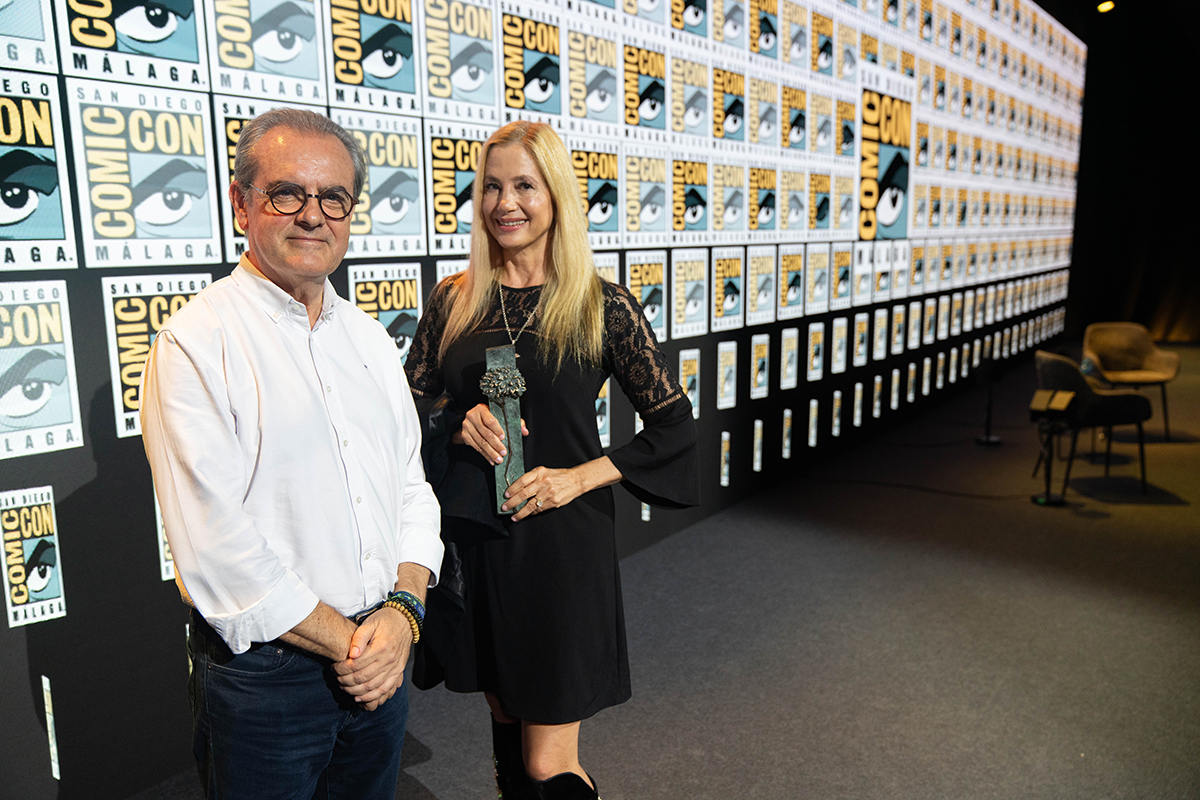
honorees, the Málaga-Sur Award will be presented to actress
Rossy de Palma; the Ricardo Franco-Film Academy Award will go to production manager
Manuela Ocón Aburto; and the Málaga Talent Award - La Opinión de Málaga will be given to
Alauda Ruiz de Azúa. The Retrospective-Málaga Hoy Award will go to Peruvian director
Francisco Lombardi, and the Biznaga Ciudad de Paraíso, awarded to essential figures in Spanish cinema, will go to
Victoria Vera. In addition, several
Biznagas de Honor will be presented: to Uruguayan actress
Natalia Oreiro; the late Argentinian director
Fabián Bielinsky on the 25th anniversary of his film
9 reinas; Argentinian directors
Mariano Cohn and Gastón Duprat and Spanish actor
Saturnino García. As every year, the Festival will also host the presentation of the
Canal Sur Andalusian Talent Award, the winner of which will be announced soon.
The Película de Oro Tribute will be
'El desencanto', directed in 1976 by Jaime Chávarri, commemorating the fiftieth anniversary of its release. This tribute is shared with the San Sebastián Film Festival, which will also feature this film in its Klasikoak section. This film will be screened in a restored copy thanks to Videomercury and Flix Olé. To mark this occasion, and in collaboration with the Spanish Film Archive (Filmoteca Española) and DAMA, the Festival has published the book ‘El desencanto. 50 años', written by Felipe Cabrerizo, Santiago Aguilar and Carlos Heredero.
The Festival will once again feature two sections focused on its mission to recover Spanish film heritage:
La Cápsula del Tiempo and
Underground Andaluz, the latter curated by Alberto Rodríguez.
Once again, Plaza de la Merced will host the
Solidarity Space, organised by the Festival in collaboration with the
Department of Social Rights, Equality, Accessibility and Inclusive Policies of Malaga City Council and the
"la Caixa" Foundation. Its aim is to open the Festival to diverse social groups and promote their inclusion.
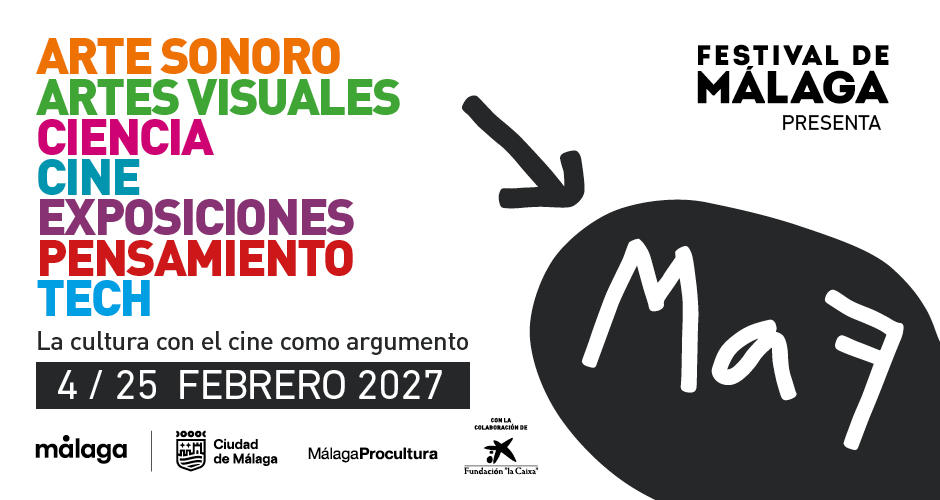
For the third year, the MaF's extended programme will include
Neópolis, a series of events that connect audiovisual arts with science and technology.
The
exhibition on Calle Larios features photographs by
Amparo García entitled
Fuera de plano (Off-Screen), showcasing images taken during the previous edition of the festival. In addition, the MUCAC will host an exhibition dedicated to Val del Omar.
The Festival will conclude on Sunday 15th with the traditional
film marathon at the Albéniz Cinema and the Rosaleda Multiplex, featuring the winning films, followed by a closing
concert by
Luz Casal.
Tickets for the 29th Festival de Málaga
Tickets, including those for the opening and closing galas, will go on sale simultaneously
tomorrow, Thursday, 12 February, at 9:00 a.m. at the box office and online. They can be purchased through the
Festival website, where the programme is already available, and at
www.unientradas.es. Tickets will be on sale at the Cervantes Theatre, Echegaray Theatre and the Albéniz Cinema.