MUCAC La Coracha opens the exhibition ‘Val del Omar. The PLAT Laboratory', which recreates the space where the artist worked in his final years
The audiovisual piece ‘Elementary triptych of Spain’ is also on display.
La muestra, que se realiza en colaboración con el Festival de Málaga, se podrá ver en el espacio municipal hasta el 24 de mayo en el Espacio Tres del equipamiento municipal
MUCAC La Coracha presents the exhibition Val de Omar. The PLAT Laboratory, which recreates the space where the artist worked in his final years. In addition, the audiovisual piece Elementary triptych of Spain, composed of three short films, will be shown in the Audiovisual Space of the municipal venue. The exhibition, presented in collaboration with the Festival de Málaga, has been made possible thanks to loans from the Reina Sofía Museum Foundation and the Reina Sofía Museum, and has the collaboration of the Val del Omar Archive. It can be seen until 24 May in Espacio Tres of the municipal venue.
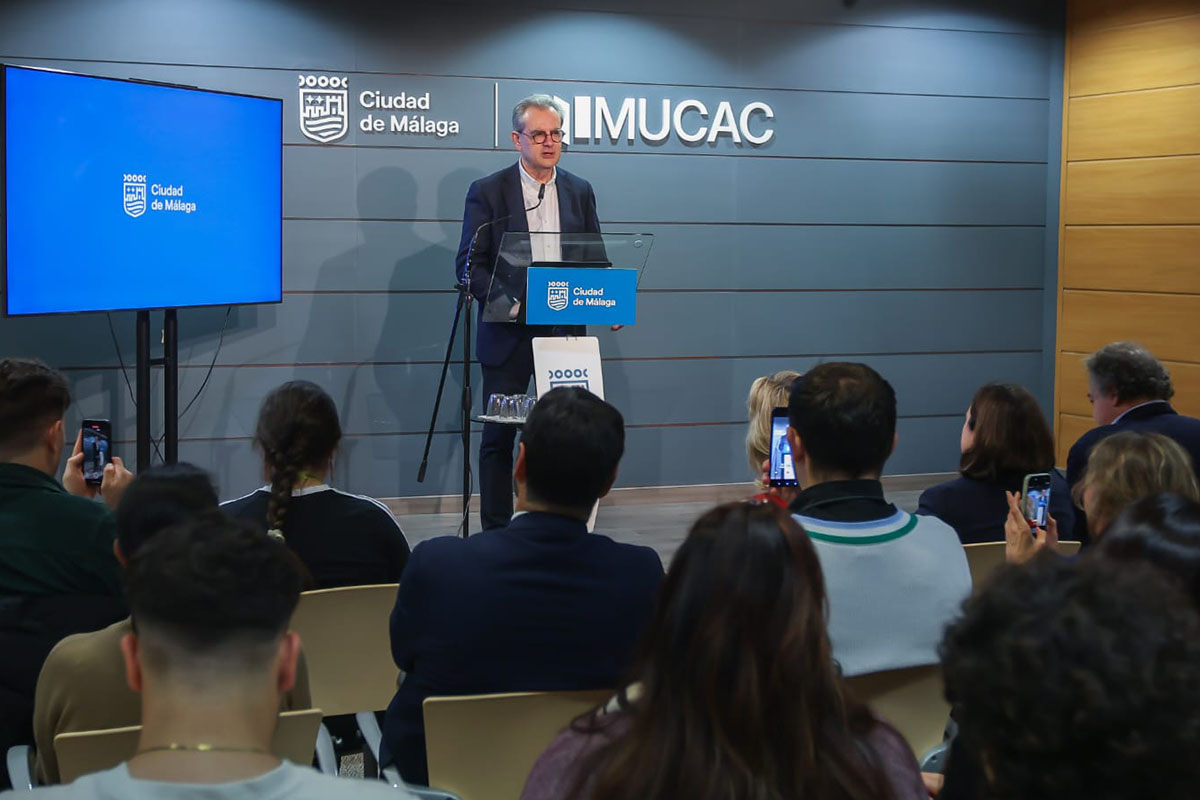
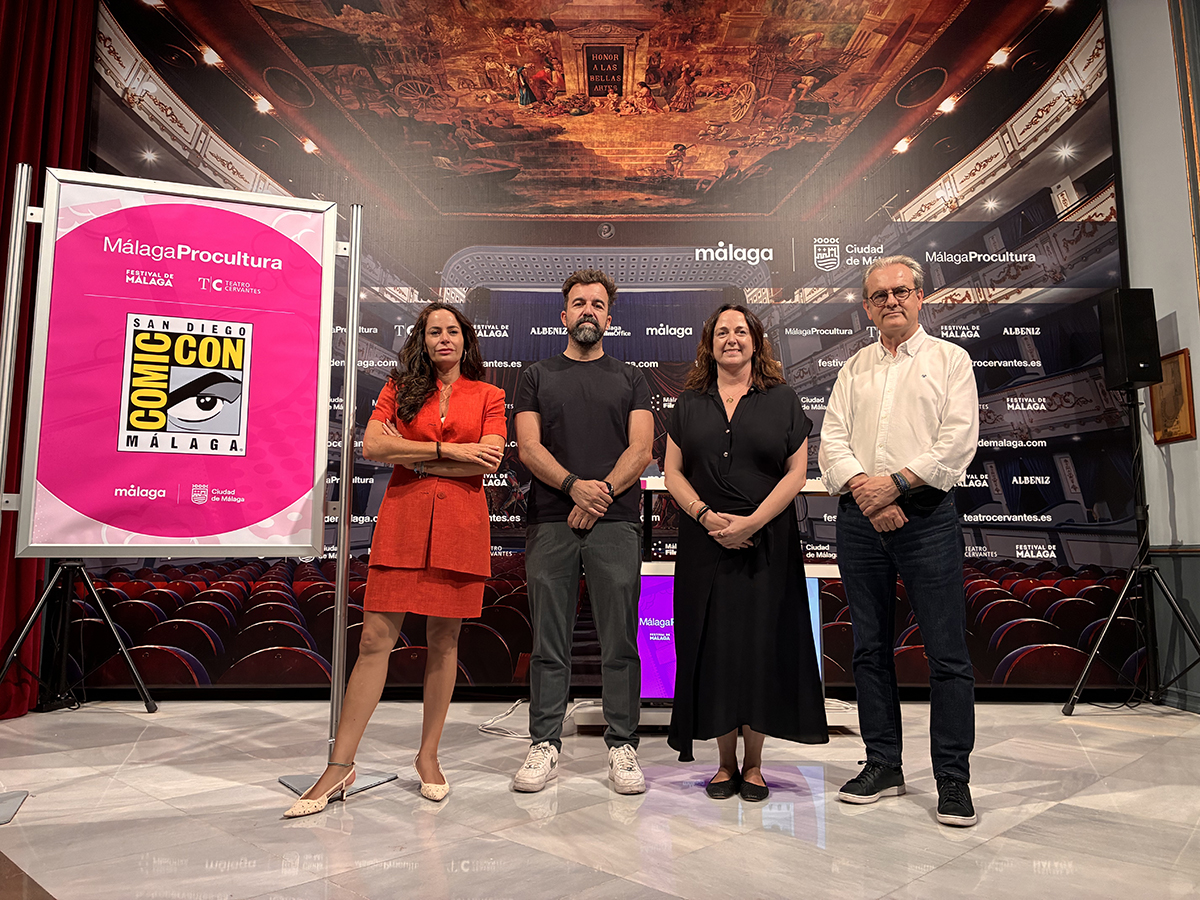
The Councillor for Culture and Historical Heritage, Mariana Pineda, along with the Director of the Public Agency for the Management of the Pablo Ruiz Picasso Birthplace and other museum and cultural facilities, Luis Lafuente; the Director of the Festival de Málaga and Manager of Málaga Procultura, Juan Antonio Vigar; and the Director of the Val del Omar Archive, Piluca Baquero, presented the exhibition.
The work of José Val del Omar (Granada, 1904-Madrid, 1982) is the result of his multifaceted roles as inventor, visionary, visual poet, and cinemist—a term coined by the artist to combine the activities of the alchemist with those of the filmmaker, thus defining his approach to cinema through technological research and his own experimental aesthetic. Val del Omar began his cinematic career in the 1920s, when he unveiled his first three technical inventions: the "variable-angle temporal optics" (what is now known as zoom), the "panoramic concave screen," and 3D cinema, which he would later develop and which would give rise to Tactile Vision.
Between 1932 and 1937, he participated, along with other members of the Generation of '27, in the Pedagogical Missions, producing more than forty documentaries, most of which have since been lost. After the Civil War, Val del Omar continued his research in the field of audiovisual technology, especially sound, before resuming his work as a filmmaker in the 1950s.
After his death, his daughter, María José Val del Omar, and his son-in-law, Gonzalo Sáenz de Buruaga, founded the María José Val del Omar & Gonzalo Sáenz de Buruaga Archive with the aim of preserving, restoring, and disseminating the work of José Val del Omar. Currently, the Val del Omar Archive is chaired by Gonzalo Sáenz de Buruaga and directed by Piluca Baquero.
Finally, the PLAT Laboratory, and the nearly one thousand items that comprise it, was exhibited for the first time at the Reina Sofía Museum between 2010 and 2011 and has also been shown in other Spanish communities, such as Badajoz, Santiago de Compostela, and Vitoria.
PLAT Laboratory (Picto-Luminous Audio-Tactile)
In 1974, his daughter and son-in-law gave him his own workshop in northern Madrid. There he created his so-called "garden of machines", a space where he developed the most innovative projects of the PLAT Laboratory. After the death of his wife, Val del Omar settled permanently in this place, which became an experimental workshop and his living space until his passing in 1982.
In this space, cameras, projectors, tools, and all kinds of working materials accumulated and were transformed, reflecting his self-definition as a filmmaker. The PLAT Laboratory houses numerous objects that trace his entire creative career. Among them are his cameras—from the one he used during the Pedagogical Missions in the 1930s to the video camera from his later years—as well as fundamental instruments of filmmaking, such as the editing table with the tools for cutting, splicing, and viewing films.
The collection is completed with multiple Super 8 and slide projectors, adiscopies—tetra-projection devices modified by Val del Omar during his time at ENOSA (Empresa Nacional de Óptica, the National Optical Company)—a large collection of lenses, and, exceptionally, one of the first lasers marketed in Spain.
The heart of the PLAT Laboratory is the Truca, a special effects table designed and built by Val del Omar as the central tool for his audiovisual experimentation. It incorporated modified projectors, custom control systems, and a special screen that allowed him to superimpose and transform images using filters, painted glass, moving optical mechanisms, and projections onto still lifes of everyday objects arranged in the workshop itself.
The resulting images were recorded on film, photographs, or video, giving rise to altered compositions that served as personal experiments in his search for what he called the PLAT unity. From this period, footage filmed on Super 8 from 1974 onward are preserved, as well as investigations with laser light, now recreated through audiovisual simulations and reconstructed devices. After his death in 1982, the laboratory remained frozen in time, an intact testament to the legacy of his creative process.
Elementary triptych of Spain
The Elementary Triptych of Spain comprises the films Aguaspejo granadino (1953-1955), Fuego en Castilla. Tactil-Visión del páramo del espanto (1958-1960)' and Acariño galaico (De barro), 1961-1995. The transparency of the waters and the landscapes of Granada are the common thread of the first film, featuring music by Manuel de Falla and flamenco song. Fuego en Castilla was filmed during Holy Week in Castile, at the Valladolid Sculpture Museum, and in the Benavente chapel in Medina de Rioseco. Its soundtrack includes the tapping of fingers and nails by the flamenco dancer Vicente Escudero striking the wood of a dry altarpiece in a church.
In Acariño galaico the emphasis on technique is relaxed, but not on the image editing, with jumps from negative to positive and the use of different distortion lenses. The clay work of sculptor Arturo Baltar inspired Val del Omar to choose earth as the film's main element, rather than the "air" that drew him to Galicia. The film remained unfinished, and in 1995, artist Javier Codesal reconstructed and completed it using the editing and sound design that Val del Omar had outlined before his death.
Share