Alauda Ruiz de Azúa receives the Málaga Talent–La Opinión de Málaga Award after reflecting on her career at the Festival de Málaga
The director, winner of five Goya Awards for Los domingos and the Biznaga de Oro for Cinco lobitos, has been recognised at the 29th edition of the festival for her meteoric career
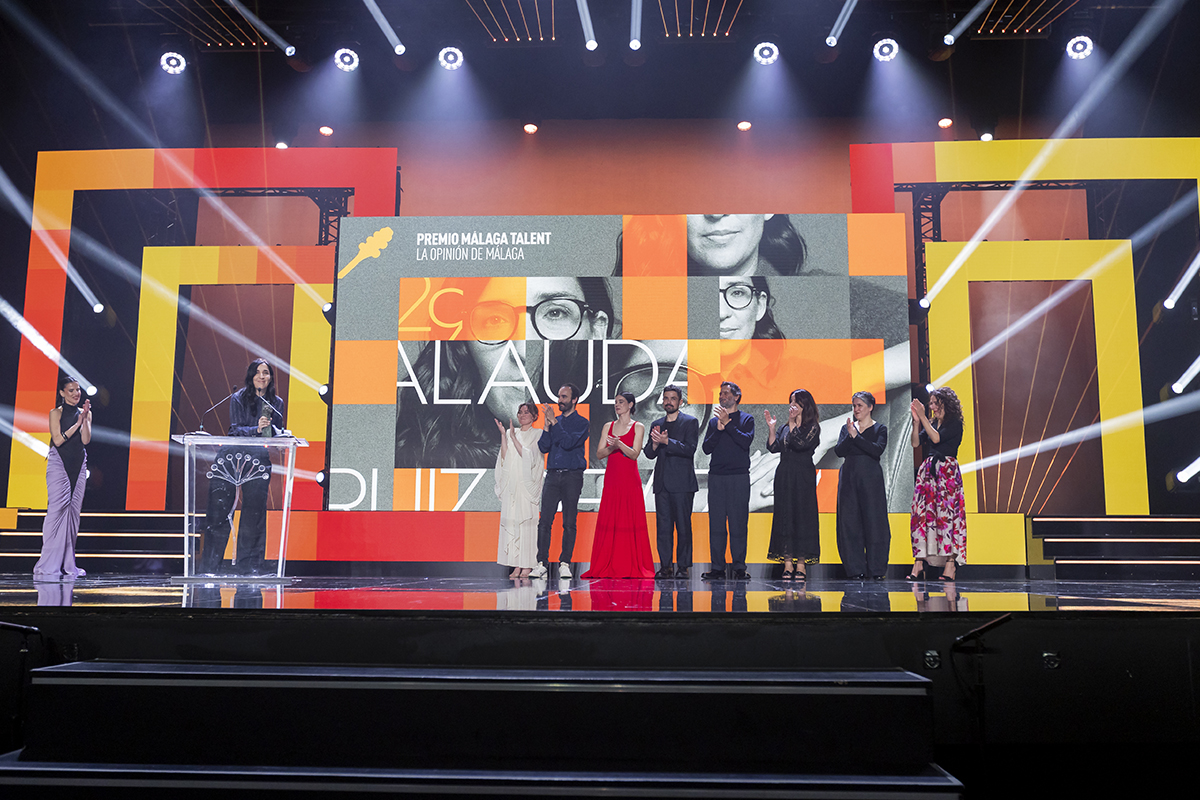
This Sunday, 8 March, the Festival de Málaga presented the Málaga Talent – La Opinión de Málaga Award to director and screenwriter Alauda Ruiz de Azúa, in recognition of a career that has established her as one of the most outstanding in recent Spanish cinema.
.
Before collecting the award at the gala held at the Cervantes Theatre, the filmmaker spoke to festival director Juan Antonio Vigar, reflecting on her career and the current situation of her filmography after the success of her latest feature film, Los domingos (Sundays).
During the conversation, Ruiz de Azúa highlighted the film’s impact since its release in cinemas. "I've never experienced a phenomenon like this before, that a film gets big little by little and transcends the cinematographic conversation to the social", said the director, who described the reception from the public and press as "a gift".
With already more than 700,000 spectators in cinemas, the film has generated multiple readings and debates around the issues it raises. "I think the subject was important, but it was also very important how we dealt with it", explained the filmmaker, who defended a humanist approach in her way of dealing with stories: "If there is a positioning in what I do, it’s wanting to understand the human side of what is at stake".
In relation to the film, Ruiz de Azúa underlined that not adopting a dogmatic stance has allowed different types of spectators to approach it from different perspectives. She explained that the intention of the film was not to question personal beliefs, but to open a space for dialogue. "I didn’t intend to attack anyone for having an intimate religious feeling," she said, stressing that this approach has contributed to generating "a space for meeting and debate".
Hours later, the festival held the Málaga Talent – La Opinión de Málaga Award Gala, a ceremony presented by actress Noemí Ruiz. During her speech, the presenter recalled the spirit of this award: "An award that is usually aimed at recognising the upward trajectory of new filmmakers. But in the case of the person we’re talking about tonight, her career has been so meteoric that she’s already at the top of Spanish cinema".
A video was shown during the gala that reviewed some of highlights of Ruiz de Azúa's filmography. In the words of the presenter, the filmmaker "has traced her own path in Spanish cinema, a path that accepts no shortcuts: particular from the universal and surgical with human contradiction".
Her debut with Cinco lobitos (Lullaby) marked the emergence of a new voice on the film scene. The film premiered at the Berlin International Film Festival and received great critical and public acclaim, as well as winning five Biznagas at the Festival de Málaga and several Goya Awards.
Collaborators and friends of the director were also at the gala, taking to the stage to dedicate a few words of recognition to her: Andrés Gil, Eduard Sola, Laia Costa and Nagore Aramburu.
Gil, a regular editor of her work, recalled his beginnings with the director and the curiosity that defines her way of working: "If I had to highlight something about the Alauda I met at ECAM, it would be her enormous curiosity. This curiosity is what makes her cinema constantly evolve. Even if she doesn't believe in God, it all started with an act of faith".
Actress Laia Costa underlined the value of Ruiz de Azúa's voice in the current context: "Alauda's cinema represents the counterweight to a society full of hostility and trenches. Her films show the contrasts, nuances and layers of reality without slogans or reductionism. It’s a cinema that relies on the spectator’s intelligence and sensitivity. When you leave from seeing one of her films, you come out wanting to talk about what you've seen, cinema stops being just entertainment and becomes a meeting place".
Screenwriter Eduard Sola stressed the importance of the director's gaze in her films: "It’s the look that’s important, not the sight. Film shapes the way we look at the world and Alauda, with her intimate portraits, helps us in that task of understanding ourselves and our families. It's good to have your view in the world”.
Share