Victoria Vera receives the ‘Biznaga Ciudad del Paraíso’ award in an evening celebrating her freedom and her legacy in film and theatre
The actress, a key figure on the cultural scene since the Spanish transition to democracy, was honoured at the Festival de Málaga after a meeting with the public in which she defended creative freedom
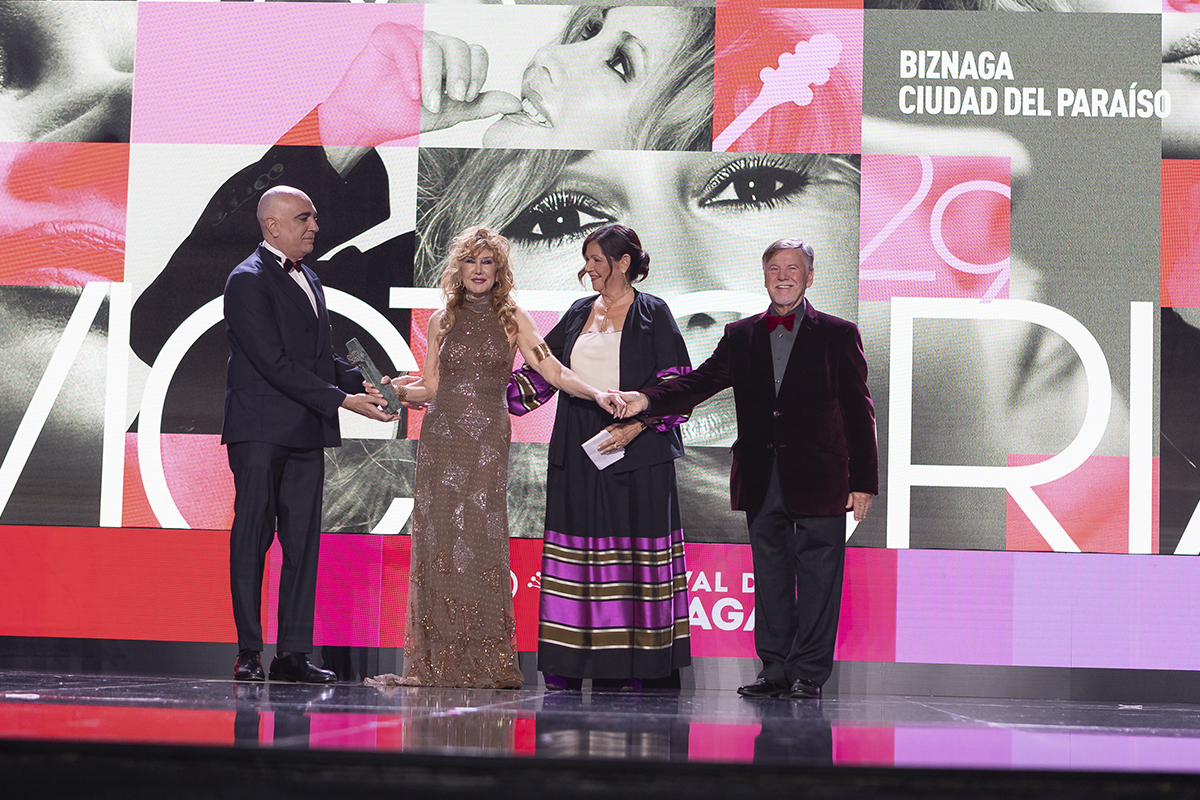
The Festival de Málaga paid tribute to the actress Victoria Vera with the presentation of the Biznaga Ciudad del Paraíso award, a recognition that honours indispensable careers in film, theatre and television. The gala, held at the Cervantes Theatre and presented by Celia Bermejo, highlighted the figure of a performer who, since the years of the Transition, has left an indelible mark on Spanish culture.
The day dedicated to Vera began in the morning with a meeting with the director of the Festival de Málaga, Juan Antonio Vigar, during which the actress revisited some of the most significant moments of her career and reflected on the cultural context in which her trajectory came to be.
During the conversation, Vera evoked an anecdote that symbolises the climate of change experienced in Spanish theatre in the last years of Franco's regime. The actress recalled the premiere of ¿Por qué corres, Ulises? by Antonio Gala, when she decided to go on stage without the safety pin that was supposed to hold her costume in place after a censorship order. “I asked Antonio Gala what I should do, and he told me: ‘Do whatever you want, my girl.’ I went on stage, grabbed the safety pin, and took it off. And right there we did away with censorship in theatre”, she recounted.
For the performer, that gesture represented the beginning of a new cultural and social era in Spain. “We had begun to enter that wonderful period of the Transition, which led us to reconciliation and to working all together to build a country”, she said.
Throughout the event, Vera also recalled her relationship with great figures of Spanish culture, many of them connected to exile—something that led the writer Francisco Umbral to define her as the “muse of the Transition”. After her work with Antonio Gala, she took part in productions such as El adefesio, by Rafael Alberti, alongside María Casares, and in projects connected to authors such as Fernando Arrabal and Vicente Blasco Ibáñez.
The actress also recalled her experience in international cinema and her friendship with the actor Anthony Quinn, whom she met during a film shoot. “During the breaks we played chess while the lights were being put up. He told me about his life, his films with Fellini—a beautiful friendship was created”, she recalled.
During the colloquium, Vera also claimed the formative value of theatre for the new generations of performers. “Let them study, study and study, and get on stage for the first time. Theatre gives you discipline, rigour and memory, and then you take on film with all that learning,” he said.
Hours later, the Cervantes Theatre hosted the gala award ceremony of the Biznaga Ciudad del Paraíso award. During the ceremony, a video was shown highlighting some of the most notable moments from her filmography and her career on stage.
The presenter Celia Bermejo wanted to highlight the pioneering character of the actress and her role in the cultural transformation of the country. “Victoria Vera was stopped by neither censors nor the explosive letters she received. Nothing could prevent her presence on stage from breaking silences and challenging the patterns of that Spain emerging from black and white”, she noted.
The gala also featured the participation of the actress’s friends and collaborators, who took to the stage to offer words of recognition in her honour. Among them, the journalist Alicia Romay, who highlighted both the artistic and human dimension of the honouree. “Despite everything she has done and all that she has meant, she possesses an almost disarming modesty, as if she still cannot fully believe who she is”, she stated, before concluding: “Tonight we are not only celebrating a great actress, but a free and authentic woman”.
For his part, director Sebastián D’Arbo recalled his experience working with her: “She is an extraordinary actress, but also a great star. If Victoria Vera had worked in Hollywood, she would be a global star today”.
The writer Manuel Francisco Reina highlighted her training at the Actors Studio in New York and her courage in tackling plays that were banned during Franco’s regime. “She was an actress who marked a time and a way of being in the culture of this country”, he said.
Finally, Victoria Vera took the stage to collect the award. “I am enormously excited, grateful and happy to be in Málaga, the city of paradise”.
He also wanted to vindicate the value of theatre as a space for freedom and reflection. “Theatre is an eternal place that has great power and makes us better”, he said, recalling its origins in classical Greece and its close relationship with democracy. The actress also alluded to the shadows that have historically accompanied this art form, such as the prohibition that for centuries prevented women from speaking on stage. In her speech, Vera also recalled how many of the first film performers came from the stage: “We dedicate ourselves to theatre and film to remain free and unique”.
Vera concluded her speech, referring to the Festival de Málaga, with a quote from the film Casablanca: “I hope this is the beginning of a long friendship”.
With this recognition, the Festival de Málaga honours the career of a performer who has accompanied, both on stage and on screen, some of the most significant moments in recent Spanish cultural history.
Share