Carlo Padial presents Pizza movies, a satirical comedy that portrays and reflects on the current state of cinema
This feature film starring Judith Martín, Berto Romero, and Bruna Cusí is competing in the Official Competition of the Festival de Málaga
Director Carlo Padial is competing in the Official Competition of the Festival de Málaga with Pizza Movies, his “new satirical and madcap comedy that reflects on the current state of cinema, a fable about the moment the audiovisual sector finds itself in and what it means for the people who love it.”
This is how Padial described his feature film at a press conference, referring to it as a very funny portrait of a couple who have problems but love each other despite everything. The director made it clear that he didn't want to make an angry or cynical film, nor one that was overdone. “There are already too many angry films, considering they reflect current society, and we wanted to make a completely different, very positive film,” he pointed out.
The story is also very generational. “After 40, we find ourselves at our physical and intellectual peak, but many problems also begin to arise with children, parents, and many other situations worthy of being studied and addressed in a comedy,” he stated. To that end, the director set out to find the funny side of the drama and recreate it.
For this reason, despite being a comedy, the themes it addresses are serious and very universal. In short, the director championed “comedy as a way to channel reality, a tool to talk about absolutely everything and laugh at problems.”
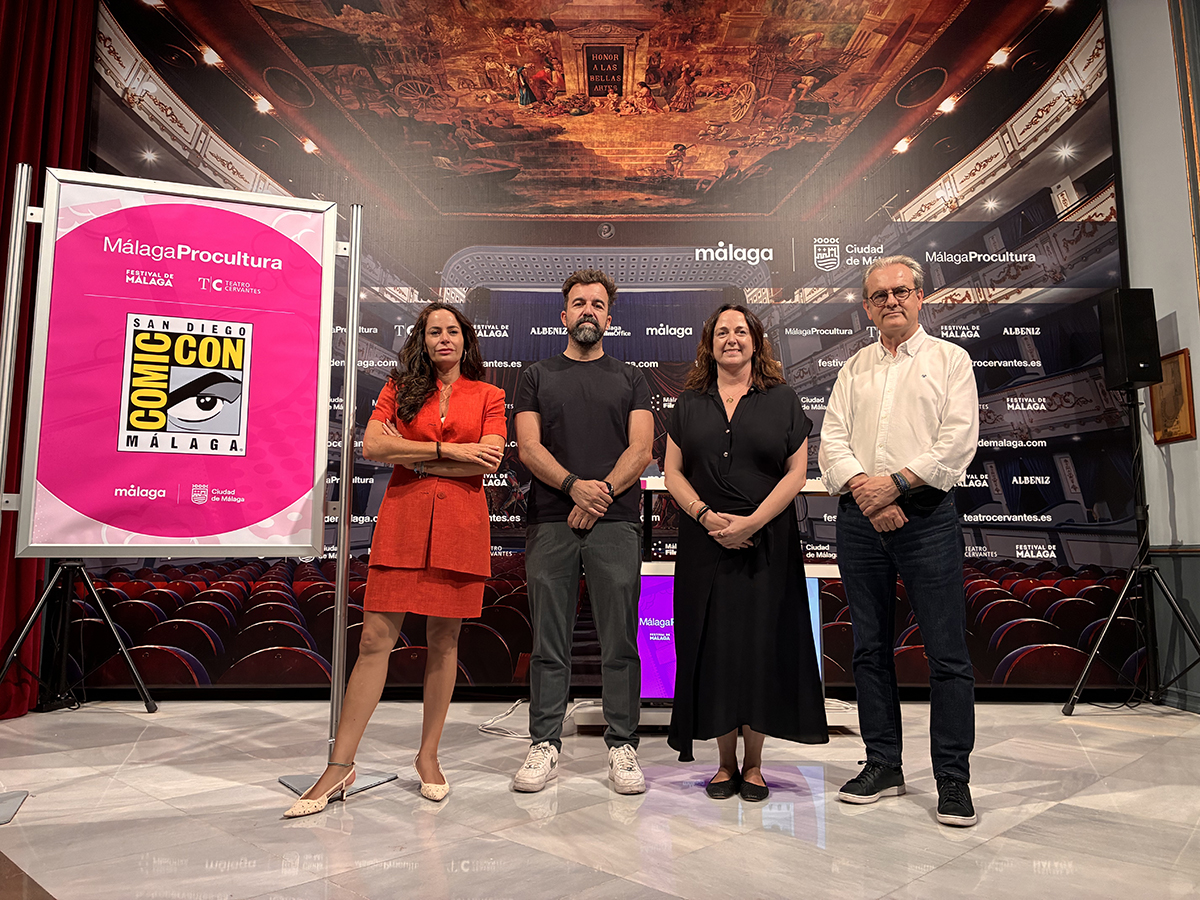
At the press conference, Padial was accompanied by the main actors, Berto Romero, Bruna Cusí, and Judith Martín, who all agreed in summarising this work as an irreverent look at the film industry. The story plays with the boundaries between reality and fiction, placing the viewer at the heart of the industry, marked by precariousness, ego, and an obsession with success. Joaquín Reyes, Raúl Arévalo, Melina Matthews, Tamar Novas, Javier Botet, Belén Barenys and Miguel Noguera complete the cast.
Starting with a chaotic shoot full of absurd situations, the film offers an ironic reflection on how cultural narratives are constructed today and on the very logic of contemporary entertainment. Padial revealed that the screenplay—co-written with Carlos de Diego and Desirée de Fez—stems from his interest in portraying the creative chaos that often surrounds audiovisual projects. In this way, the film attempts to capture that mixture of enthusiasm, improvisation, and lack of control that often defines the creative processes within the industry.
The filmmaker has moved away from the more traditional structures of comedy to explore a freer and more fragmented narrative form. In that sense, he added that the project deliberately plays with absurdity and a certain sense of creative disorder to reflect the spirit of the filming process itself.
For his part, Berto Romero, who in addition to acting is also a producer on the project, highlighted the film's highly playful nature during the press conference. According to Romero, the film stems from the creative camaraderie among the team members and a clear desire to experiment with the codes of humour and cinema within cinema.
For the cast, one of the most stimulating aspects of the project was precisely working in an environment where improvisation and creative freedom were fundamental. This working dynamic allowed many scenes to evolve unexpectedly and organically during filming.
On the other hand, actress Judith Martín emphasised the film's satirical tone and its ability to poke fun at both the cultural industry and the dynamics of the entertainment world itself. From their perspective, the script constantly plays with the boundary between caricature and reality, constructing characters that reflect different facets of the contemporary media ecosystem.
Finally, the team emphasised that Pizza Movies also functions as a kind of collective self-portrait of the current state of audiovisual media. Through its irreverent tone and unconventional structure, the film offers a critical—yet profoundly humorous—look at the contradictions within the industry itself.
Share