La casaca de dios revives the important figure of Maradona at the Festival de Málaga
The film, directed by Fernán Mirás, was represented by the producers Ramiro Navarro and Ángel Zambrano in a colloquium after the screening
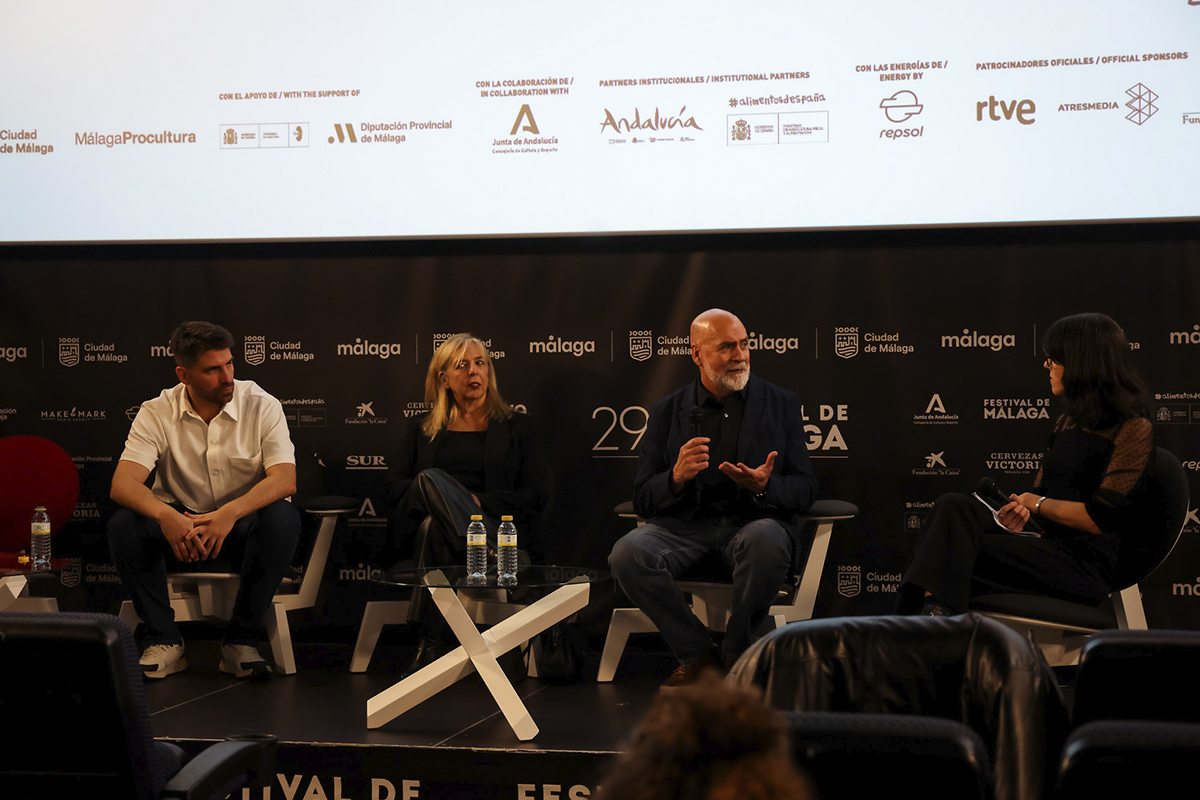
The 29th Festival de Málaga hosted the world premiere of La casaca de Dios (The shirt of God), the new feature film by Fernán Mirás, followed by a colloquium with the audience, with the participation of producers Ramiro Navarro and Ángel Zambrano, as well as Mariana Volpi, associate producer and the project’s head of legal advice.
During the meeting, the team shared with the audience the origin of the film, its relationship with Argentina's collective memory, and the long creative process that gave shape to this project, which is part of the Official Out of Competition section.
La casaca de Dios is based on a true story steeped in football passion and the symbolic weight of a historic moment in Argentina's history. The film reconstructs the journey of a very particular relic linked to Diego Armando Maradona and the 1986 Mexico World Cup, turning football into a space where popular epic, national memory and the emotions shared by an entire country intersect.
Through a true story with fictionalised elements, the film offers a combination of drama with comedy, present with past, and football with history. It is a look that combines humour, nostalgia and reflection on the cultural impact of such a unique figure as the Argentine footballer.
During the colloquium, the producers recalled how the seed of the project emerged from the collective feeling that certain symbols deeply linked to Argentinean identity seemed to be "outside the country", a concern that helped to set the story in motion. In this context, Ángel Zambrano explained that the team initially explored different approaches within comedy, trying to find the right tone to deal with a figure as enormous as Maradona, especially at a time when the mourning of his death was still very present.
He also noted that screenwriter Marcos Carnevale felt that the film could serve as an indirect tribute to the fallen combatants of the Falklands War in 1982, recalling Maradona's own words when, after winning the World Cup, he dedicated the victory to the young men who died in that armed conflict.
Meanwhile, Ramiro Navarro said that the spirit of the film was to recreate a kind of Cinema Paradiso of football, a deeply emotional story that mixes reality and fiction to portray how sport can become a vehicle of memory and community.
Associate producer Mariana Volpi, in charge of the project's legal advice, also stressed that the film attempts to transform a historical context marked by tragedy into a story that recalls one of the moments that brought joy back to the Argentinean people. Volpi also wanted to highlight the lengthy process of developing the film, pointing out that Navarro and Zambrano were the real driving forces behind the story, a situation that was used to highlight the importance of film production and the work of the producers.
Last, some curiosities of the creative process were shared, such as the fact that the team came up with different possible endings depending on what happened in the World Cup final in Qatar, reflecting the extent to which the film depends on and relates to contemporary football passion.
Share