The Documentaries Official Competition features films about forced migration and the struggle of indigenous peoples in Guatemala
Stories about family relationships, memory, and nostalgia were also screened
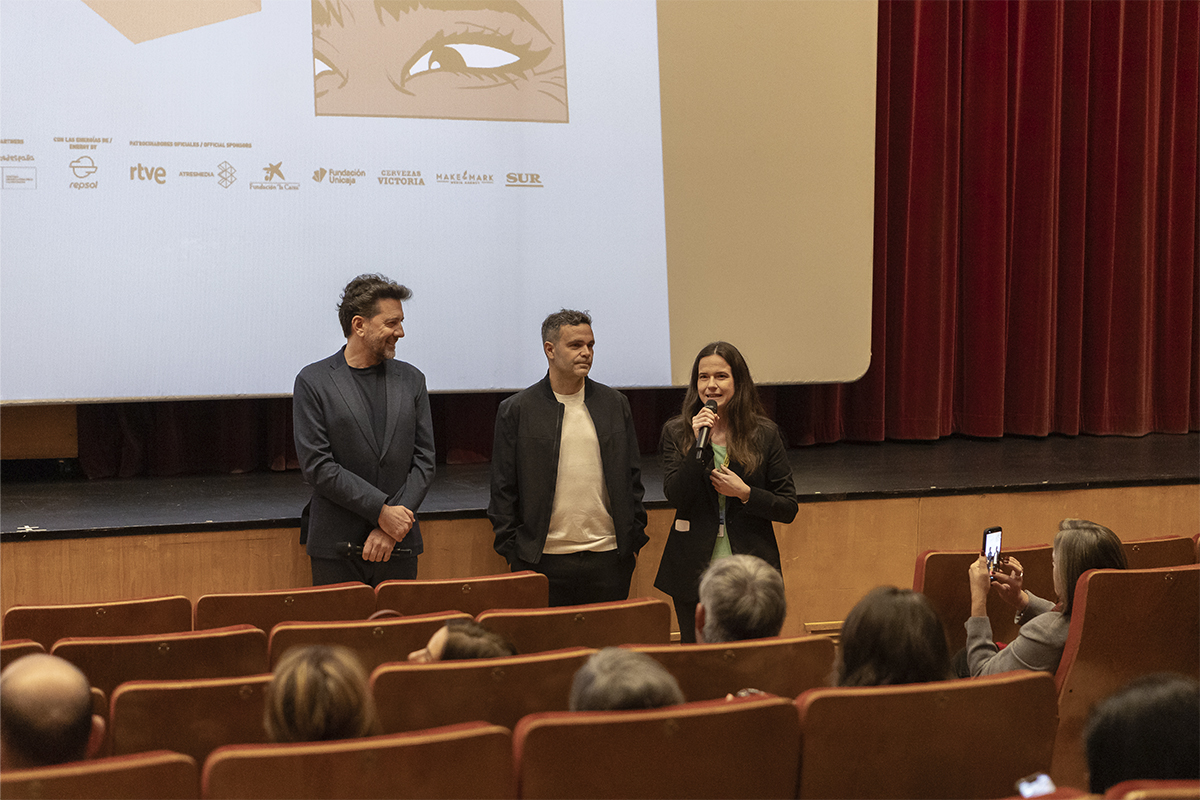
The 29th Festival de Málaga presented four titles in the Official Documentary Section on Wednesday, 11 March: Renacimiento, Black Water, Llenya (Leña) and Level.
The first screening on Wednesday at the MVA Cultural Center featured the short film Renacimiento by Latin American filmmakers and documentarians Karel Barra and Ana Turbay. The directors have developed projects in Chile and Central America, focusing on communities, resistance, and human rights.
With a body of work that explores territories, memory, and identity from an intimate and social perspective, Karel Barra and Ana Turbay combine cinematic observation with field research.
The documentary presented at the Málaga Film Festival was filmed in Baja Verapaz (northern Guatemala), where the Maya Poqomchi community of Renacimiento is resisting the dispossession that expelled them from their land in the 1990s. Today, a new generation is leading the collective struggle for justice, memory, and the recovery of their ancestral territory. A living testament to the strength of Indigenous peoples and their tireless defense of land and life.
Following this, the feature film Black Water by director Natxo Leuza was screened, addressing the problems of climate change and the forced migration of millions of people.
This is the case of the documentary's protagonists, Lokhi and his family, who have to leave their home in Bangladesh and migrate to Dhaka. Black Water portrays the anguish that rising sea levels, storms, cyclones, and erosion cause to many families, forcing them to abandon rural areas. It is estimated that some 3,000 people arrive in the capital of
Bangladesh every day. On a global scale, this could be the largest mass migration in human history.
With a long career in documentary filmmaking, Natxo Leuza explained his interest in this topic for his film: “Many films originate from photographs, news reports; and there was a headline that said ‘we are facing the largest mass migration in history,’ that really caught my attention and I kept investigating. I discovered that data for 2050 indicates that between 20 and 30 million people will have to be internally displaced from southern Bangladesh to Dhaka, which is on the verge of collapse. This conjured up very apocalyptic images in my mind. So we saw the need to talk about climate refugees.”
The screenings at the MVA Cultural Centre concluded with the presentation of the short film Llenya (Firewood) by Catalan director Manel Raga. The short film is a kind of continuation of Manel vive en Sarajevo, a 2017 documentary short directed by Manel Raga about his relationship with his grandfather. With Llenya (Firewood), the director attempts to build a connection between the two films with a poetic approach laden with symbolism and nostalgia.
“I have a way of filming that establishes a personal relationship with my grandfather. It was also important for me to preserve the conversations we were having while I was filming. To preserve this sense of intimacy,” Manel Raga explained to the audience.
The final presentation of the day was given by directors Anna Berkhof and Carlos Mora Fuentes, who brought their feature film Level to the Festival de Málaga. This diptych begins in the Netherlands, where Anna mourns the death of her father, and ends in Spain, where Anna and Carlos welcome their son Leo and renovate their house in the mountains. Halfway between documentary and freer forms, Level becomes a portrait of the landscape as a palimpsest: where layers of history and memory intertwine with the rhythms of life. An intimate meditation on life and death, intertwining personal experiences and reflections on the relationship between humankind and nature.
“It was a very instinctive, very fluid shoot. It was a bit like going hunting, and then, yes, in the editing we found the film,” commented director Carlos Mora Fuentes about the filming process, which began amidst a life-changing event for the couple: leaving one country and starting a new life in another.
Director Anna Beckhof added: “We wanted to make a film about my father, the owner of the house where we lived in Holland. At that time, we didn't know we were going to move to Spain, nor that we would have a child. And all these changes led us to think about the idea of the diptych, which perfectly encapsulates the contrast between Spain and where we lived.”
Share